HealFern may earn a commission if you buy through links on this page, at no extra cost to you. That does not change what we report.
Part of our GlycoFree overview. Last checked November 5, 2026.
GlycoFree ingredients, per the vendor's label image, are chromium (400 mcg, as chromium polynicotinate) plus a 200 mg proprietary blend of seven items: inulin, berberine, cassia cinnamon, bitter melon, banaba, gynostemma and L-leucine.[1] Split evenly, that blend gives about 29 mg each. The sales page itself lists none of them; we found the label only as an image file.
GlycoFree ingredients at a glance
Eight active ingredients appear on the label, and only one has a printed amount. The grades below come from our evidence notes and judge the ingredient at the doses studied, not inside this tablet.
| Ingredient | Role claimed | Amount disclosed? | Evidence grade |
|---|---|---|---|
| Chromium (polynicotinate) | Blood sugar | Yes, 400 mcg | Mixed glucose results |
| Inulin (chicory root) | Fiber, blood sugar | No | Weak at this dose |
| Berberine HCl | Blood sugar | No | Moderate, low-quality reviews |
| Cassia cinnamon 10:1 | Blood sugar | No | Weak below gram doses |
| Bitter melon 4:1 | Blood sugar | No | Weak, null meta-analyses |
| Banaba (1% corosolic acid) | Blood sugar | No | Limited, tiny trials |
| Gynostemma leaf extract | Blood sugar | No | Limited, one research group |
| L-leucine | Blood sugar | No | Weak, null trials |
The label image was read on November 5, 2026.[1] Other ingredients are xylitol, natural flavors, stevia, stearic acid, magnesium stearate and silicon dioxide.
What is in each ingredient, and what does research say?
Each section gives the human trials we hold and how the doses compare with the label.
Chromium
Chromium is a trace mineral. Trials used 200 to 1,000 mcg a day, so the 400 mcg here sits inside that range, well above the adult Adequate Intake of 25 to 35 mcg.[2] The NIH Office of Dietary Supplements calls glucose results mixed, and a Cochrane review found no reliable evidence for weight loss.[3]
Gynostemma (jiaogulan)
Gynostemma pentaphyllum, also called jiaogulan, appears here as a leaf extract. In three small trials in people with type 2 diabetes, 6 g a day of tea lowered fasting glucose and HbA1c over 4 to 12 weeks.[4] All three came from one Vietnamese group. A 450 mg extract lowered glucose in 16 healthy men.[5] At about 29 mg, GlycoFree's share would be a small fraction of either dose. A pooled analysis of 8 clinical studies (584 people) found lower fasting glucose and HbA1c, with heavy reliance on small trials.[16] Grade: limited.
Berberine
Berberine HCl is sourced here from Phellodendron amurense bark. It lowered blood glucose in type 2 diabetes trials, yet an overview of 54 systematic reviews rated 45 very low quality.[6] The abstracts we read did not state daily doses, so we cannot compare the label amount directly. HealFern's berberine guide covers the weight data.
Cassia cinnamon
The label lists a 10:1 cassia bark extract. A meta-analysis of 12 trials found body-composition effects only at 2 g a day or more for at least 12 weeks.[7] Grade: weak at sub-gram doses. See HealFern's cinnamon for blood sugar guide.
Bitter melon
Bitter melon (Momordica charantia) appears as a 4:1 extract. Two meta-analyses of 9 and 10 trials found no significant change in glucose, HbA1c or weight.[8] Grade: weak.
Banaba
Banaba leaf supplies corosolic acid. One crossover study gave 10 mg of corosolic acid and saw lower glucose 90 minutes into a test drink.[9] At 1% corosolic acid, a 29 mg share would hold about 0.3 mg (our arithmetic). Grade: limited.
Inulin
Inulin is a chicory root fiber. A meta-analysis of 33 trials found it lowered glucose only in people with diabetes, at doses measured in grams.[10] Grade: weak at milligram doses.
L-leucine
L-leucine is a branched-chain amino acid. In 60 older men with type 2 diabetes, 7.5 g a day for 6 months left HbA1c unchanged, 7.1% vs 7.2%.[11] A 3 g daily dose during dieting "did not impact glucose metabolism".[12] Observational data add a note of caution: higher blood levels of branched-chain amino acids are associated with later type 2 diabetes.[15] That link does not show leucine causes harm, but it gives no reason to expect a benefit. Grade: weak.
How transparent is the GlycoFree formula?
Only partly. The full label exists, but seven of eight active doses are hidden inside one 200 mg total, and the ingredient list is absent from the sales page.[1][13]
The blend math is simple: 200 mg across seven items averages about 29 mg, and the real split could put one item at 150 mg and the rest near 8 mg. Inulin and leucine are usually dosed in grams, so even the whole blend could not reach a studied amount of either.
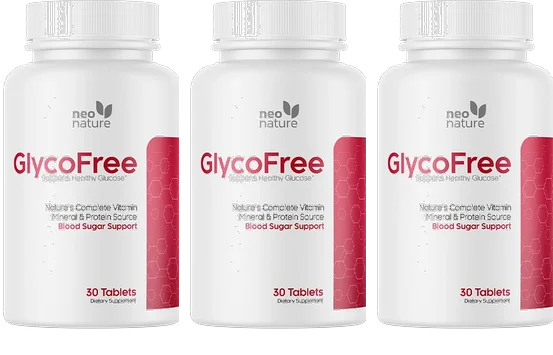
Third-party sites sometimes print different ingredient lists. We go by the vendor's own label image as read on November 5, 2026, and the front label's "Complete Vitamin Mineral & Protein Source" line does not match it: there are no vitamins and one mineral.
Ingredient safety and interactions
The main caution is low blood sugar if you take diabetes medicine. Chromium, bitter melon, gynostemma and berberine can all add to glucose-lowering drugs.[2][4][14] Bitter melon and berberine are not for pregnancy, and cassia contains coumarin, a concern for people with liver disease. The tablet is sweetened with xylitol, which is toxic to dogs, so store bottles out of reach. Our GlycoFree side effects page has the full table and a doctor-now list.
Do these ingredients prove GlycoFree works?
No. Ingredient trials used single ingredients at known, mostly larger doses, often in people not taking diabetes drugs. GlycoFree combines eight items at mostly hidden doses, and nobody has tested that mix. The positive trials (gynostemma, berberine, banaba) are small, and two ingredients (leucine, bitter melon) failed in theirs. Our does GlycoFree work page lays out each claim against the evidence. If you want to try it, talk to your doctor first and start with one bottle.
Back to the GlycoFree overview.
Frequently asked questions
What is the main ingredient in GlycoFree?
Chromium is the only ingredient with a printed dose, 400 mcg as chromium polynicotinate. The other seven, including berberine, gynostemma and cassia cinnamon, share a 200 mg proprietary blend whose individual amounts the label does not show.
How much berberine is in GlycoFree?
The label does not say. Berberine is one of seven items in a 200 mg proprietary blend, which averages about 29 mg per item. The real amount could be higher or lower, and the vendor does not publish the split.
Does GlycoFree contain sugar or sweeteners?
The label lists no sugar. It is sweetened with xylitol and stevia (Reb A), with natural flavors. Xylitol is toxic to dogs, so keep the bottle where pets cannot reach it.
Is GlycoFree a complete vitamin source?
No. The front label calls it a complete vitamin, mineral and protein source, but the Supplement Facts panel lists no vitamins, one mineral (chromium) and one amino acid (L-leucine) inside the blend.
Where can I see the GlycoFree label?
The vendor does not list ingredients on its sales page. We found the full Supplement Facts panel as an image file on glycofree.com, stored under the site's privacy folder, and read it on November 5, 2026.
Sources
- GlycoFree Supplement Facts label image. GlycoFree (vendor), read November 5, 2026.
- Chromium: Fact Sheet for Health Professionals (archived copy). NIH Office of Dietary Supplements, read October 19, 2026.
- Cochrane review of chromium picolinate for overweight or obesity (PMID 24293292). PubMed, read October 19, 2026.
- Gynostemma pentaphyllum tea in drug-naive type 2 diabetes, 12-week trial (PMID 20213586). PubMed, read November 5, 2026.
- Gynostemma extract 450 mg in healthy young men, crossover trial (PMID 38004115). PubMed, read November 5, 2026.
- Overview of systematic reviews of berberine (PMID 40269802). PubMed, read October 19, 2026.
- Dose-response meta-analysis of cinnamon and body composition (PMID 30799194). PubMed, read October 2, 2026.
- Meta-analysis of 9 bitter melon trials (PMID 38274207). PubMed, read October 2, 2026.
- Corosolic acid and post-challenge glucose, crossover study (PMID 16549220). PubMed, read October 20, 2026.
- Meta-analysis of 33 inulin-type fructan trials (PMID 34401107). PubMed, read October 2, 2026.
- Leucine with meals for 6 months in older men with type 2 diabetes (PMID 21525248). PubMed, read November 5, 2026.
- Leucine during energy restriction in adults at metabolic risk (PMID 37923932). PubMed, read November 5, 2026.
- GlycoFree sales page. GlycoFree (vendor), read November 5, 2026.
- Bitter Melon. Memorial Sloan Kettering Cancer Center, read October 2, 2026.
- Meta-analysis of circulating branched-chain amino acids and type 2 diabetes (PMID 36297095). PubMed, read November 5, 2026.
- Meta-analysis of 8 Gynostemma pentaphyllum clinical studies on glucose (PMID 42064816). PubMed, read November 5, 2026.
This page is general information, not medical advice. Dietary supplements are not reviewed by the FDA for safety or effectiveness before they are sold and are not intended to diagnose, treat, cure or prevent any disease. Talk to your doctor before taking any supplement, especially if you are pregnant, nursing, take medication or have a health condition.