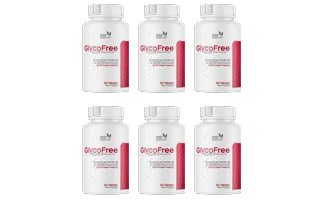
Our verdict on GlycoFree
What we liked
Watch out for
- The sales page targets type 2 diabetes but lists no ingredients[1]
- A 200 mg proprietary blend hides 7 doses, about 29 mg each on average
- Berberine and cinnamon amounts look far below the doses used in glucose studies
- Several ingredients can lower blood sugar on top of diabetes medicines (hypoglycemia risk)[13]
- Refund terms conflict (90 vs 180 days, empty vs unused bottles) and return shipping is on you[3]
- The front label says it is a complete vitamin, mineral and protein source; the facts panel shows no vitamins
HealFern may earn a commission if you buy through links on this page, at no extra cost to you. That does not change what we report.
GlycoFree is a once-daily tablet sold through BuyGoods for people with blood sugar goals, and its label shows 400 mcg of chromium plus a 200 mg proprietary blend of 7 plant and nutrient items.[2] Split 7 ways, that blend averages about 29 mg per ingredient, which is small for herbs like berberine and cinnamon.
We found no published trial of the finished tablet. Several of its ingredients can lower blood sugar, so anyone taking metformin, insulin or a sulfonylurea should talk to their doctor before trying it. We explain how we check products on our research methods page.
What is GlycoFree and what does the vendor claim?
Each bottle holds 30 tablets, and the label serving is 1 tablet once daily with water, so one bottle lasts a month.[2] The brand printed on the bottle is neo nature, distributed by neonature of Lakeland, Florida.
BuyGoods is the retailer that runs the checkout and also handles refund requests. The sales page itself does not list the ingredients. We found the full label only as an image file stored under the site's privacy folder, which we read on November 5, 2026.[2]
GlycoFree facts at a glance
GlycoFree is a 30-tablet chromium and herbal blend supplement that costs $49 to $69 a bottle (checked November 5, 2026), sold through BuyGoods with a refund window the vendor states as both 90 and 180 days. The table sums up what we confirmed.
| Item | What we found | Source |
|---|---|---|
| What it is | Dietary supplement pitched at type 2 diabetes goals | [1] |
| Form and serving | Tablet, 1 a day with water, 30 per bottle | [2] |
| Ingredients disclosed | Yes on the label image, no on the sales page; 7 blend doses hidden | [2] |
| Price range | $49 to $69 per bottle, checked November 5, 2026 | [1] |
| Refund window | 90 days (sales page) or 180 days (refund page and terms) | [3] |
| Seller | BuyGoods checkout; distributor neonature, Lakeland FL | [5] |
| Where it is not sold | Amazon and Walmart listings not checked by us | NOT checked |
Who might consider GlycoFree, and who should not?
GlycoFree may interest an adult without diabetes medicines who wants a single daily tablet with chromium and a small herbal blend, and who accepts that no trial tests the tablet. It is a poor fit for anyone using it in place of medical care for blood sugar or diabetes.
A supplement does not replace a diagnosis, an A1C test or a prescribed plan. If you have symptoms of high blood sugar, our guide to high blood sugar symptoms lists what to watch for.
Skip it or ask a doctor first if any of these apply:
- You take metformin, insulin, a sulfonylurea or any glucose-lowering drug
- You are pregnant, breastfeeding or under 18 (the label itself says to consult a physician)[2]
- You have kidney disease, a G6PD deficiency or take thyroid medicine
- You take blood thinners or antiplatelet drugs (xylitol is in the tablet)
Our page on GlycoFree and type 2 diabetes goes deeper on the medicine questions.
How does GlycoFree claim to work?
The vendor says GlycoFree supports "optimal type II diabetic health" and can "reduce type II diabetes-related fatigue", but the sales page does not explain a mechanism or name the ingredients behind it.[1] What we can describe comes from the label, not from the pitch.
Several label items have been studied for glucose. Berberine lowered blood glucose in type 2 diabetes trials, according to an overview of systematic reviews, though most of those reviews were rated very low quality.[6] Banaba's corosolic acid lowered glucose after a sugar drink in one small single-dose study.[9] Bitter melon did not change glucose or HbA1c in a meta-analysis of 9 trials.[12]
None of this tests the GlycoFree tablet at its own doses. We weigh each piece on does GlycoFree work.
What ingredients are in GlycoFree?
GlycoFree contains chromium 400 mcg (as chromium polynicotinate, 1143% of the Daily Value) plus a 200 mg proprietary blend of inulin, berberine HCl, cinnamon extract 10:1, bitter melon extract 4:1, banaba leaf extract (1% corosolic acid), gynostemma leaf extract and L-leucine.[2] Only chromium has a stated dose.
The other ingredients are xylitol, natural flavors, stevia (Reb A), stearic acid, magnesium stearate and silicon dioxide. Xylitol is toxic to dogs, so keep the bottle out of reach of pets.
| Ingredient | Dose disclosed | Evidence grade | Note |
|---|---|---|---|
| Chromium 400 mcg | Yes | Weak | Glucose results mixed; trials used 200 to 1,000 mcg[15] |
| Berberine HCl | No | Moderate in general, Weak at this dose | Trial dose reporting is poor[7] |
| Cinnamon extract 10:1 | No | Not graded by us | Share of a 200 mg blend |
| Bitter melon extract 4:1 | No | Weak | Null meta-analyses[12] |
| Banaba (1% corosolic acid) | No | Limited, Weak at this dose | Whole blend would hold about 2 mg corosolic acid |
| Inulin | No | Weak | Fiber trials dose in grams[17] |
| Gynostemma, L-leucine | No | NOT checked | No evidence card in our pack |
The banaba figure is our arithmetic: even if the entire 200 mg blend were banaba at 1% corosolic acid, it would hold about 2 mg, against 10 mg in the single-dose study.[9] The front label calls the product "Nature's Complete Vitamin Mineral & Protein Source", yet the panel lists no vitamins, one mineral and one amino acid. Full detail is on GlycoFree ingredients, and our main-site guides cover berberine and cinnamon for blood sugar on their own.
Does GlycoFree work for blood sugar diabetes?
No trial of GlycoFree for blood sugar or diabetes exists that we could find, so there is no direct evidence that the tablet works. The case rests on ingredient studies run at doses the label either hides or likely misses.
Here is the evidence ladder, from weakest link to strongest:
- Plausibility: berberine, banaba, chromium and inulin each have some glucose data, so the ingredient choice makes sense on paper.
- Ingredient trials: berberine lowered glucose in type 2 diabetes trials, but most reviews were very low quality.[6] Banaba at 1,000 mg a day for 12 weeks lowered fasting glucose in 24 adults with metabolic syndrome.[10] Inulin-type fructans lowered glucose only in people with diabetes, at gram doses.[17] Chromium results for glucose are mixed, and a Cochrane review found no reliable evidence that it helps weight loss.[14][15]
- Dose match: the blend is 200 mg total, about 29 mg per item on average, against banaba studied at 1,000 mg and inulin studied in grams.
- Finished-product trial: none found.
The vendor's "proven advantages" line is a claim with no study attached.[1] A small, unknown amount of each herb is unlikely to match the trial results above. Diet still carries most of the weight; our low glycemic foods list is a practical place to start.
GlycoFree side effects: who should ask a doctor first?
The main GlycoFree risk is low blood sugar when it is taken with diabetes medicines, because berberine, bitter melon, banaba and chromium can all add to their glucose-lowering effect.[13][15] Ask a doctor first if you take any of these medicine groups.
- Diabetes drugs (metformin, insulin, sulfonylureas): additive glucose lowering
- Thyroid medicine: chromium can affect levothyroxine absorption[15]
- Blood thinners or antiplatelet drugs: a xylitol drink raised platelet reactivity in one study[18]
- Pregnancy and breastfeeding: NCCIH says berberine can harm newborns, and bitter melon should be avoided in pregnancy[8][13]
Bitter melon can cause stomach upset, and inulin can cause gas and bloating. A review found no adverse effects for banaba in controlled trials, but those trials were small and short.[11] High-dose chromium picolinate has case reports of kidney failure, though GlycoFree uses a different form.[16]
See a doctor right away if you have:
- Shakiness, sweating, confusion or a fast heartbeat (possible low blood sugar)
- Fainting or a seizure
- A racing or irregular heartbeat
- Very dark urine or a sharp drop in how much you urinate
The full list is on GlycoFree side effects.
What do GlycoFree complaints and buyer reports show?
We found no recalls and no adverse event reports naming GlycoFree in FDA databases, searched on November 5, 2026. Customer rating sites could not be read, so we cannot say what buyers report there.
- FDA recalls (openFDA): none found for GlycoFree or neo nature
- FDA adverse event reports (CAERS): none naming GlycoFree
- FDA warning letters: NOT checked
- BBB: NOT checked (no profile visible in the page code)
- Trustpilot: NOT checked (access blocked)
The paper trail does show friction points worth knowing: refund terms that conflict, return shipping paid by the buyer and a post-checkout upsell page we did not check. An empty database search is not proof of safety. We track buyer reports on GlycoFree complaints.
How much does GlycoFree cost?
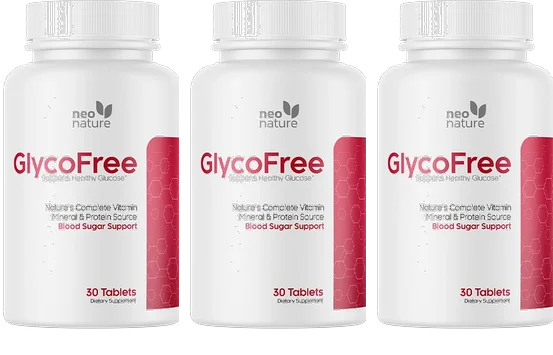
GlycoFree costs $69 for one bottle, $177 for three and $294 for six on the vendor sales page, checked November 5, 2026.[1] The single bottle adds a "small shipping fee" whose amount the page does not show.
| Package | Per bottle | Total | Shipping |
|---|---|---|---|
| 1 bottle (30 days) | $69 | $69 | Small fee, amount not shown |
| 3 bottles (90 days) | $59 | $177 | Free |
| 6 bottles (180 days) | $49 | $294 | Free |
The vendor shows much higher crossed-out "regular prices" that look inflated, so we do not count them as savings. BuyGoods checkout totals were not captured. The checkout has a "Subscribe & Save" box that was not pre-ticked; make sure it stays unticked unless you want repeat orders, and decline upsells you did not plan for.
Bundle math and any coupon offers are on GlycoFree price and coupon.
What is the GlycoFree refund policy?
GlycoFree's refund window is 90 days on the sales page but 180 days on the refund page and terms, which took effect November 2023.[1][3][4] BuyGoods also handles refund requests.
- Call (877) 286-4137 or email the support address to start a return.[5]
- Ship the bottles at your own cost to GlycoFree, P.O. Box 90129, Lakeland FL 33804, and keep the tracking number.
- Expect the refund in 5 to 7 business days on a credit card or 5 to 10 on a debit card.
The sales page promises a refund on "even your empty bottles" but deducts shipping and handling; the refund page covers "any unused bottles". Get your window in writing before you buy.
Where can you buy GlycoFree?
GlycoFree is sold through its own sales page with a BuyGoods checkout, which is where the label, prices and refund terms in this guide apply. We did not check Amazon or Walmart listings.
Third-party marketplace sellers are outside the vendor refund policy, and a listing can show an older or different label. If you buy, use the sales-page checkout so the 90 to 180 day refund terms cover you, and keep your BuyGoods order email. Our page on where to buy GlycoFree covers resellers and what to check before ordering.
Is GlycoFree legit?
GlycoFree is a real product with a published label, a US phone line and a known retailer, BuyGoods, but its seller details are thin. The terms name the owner only as "Glycofree (COMPANY)" and set Barbados law with binding arbitration in St. Michael, Barbados, plus a class action waiver.[4]
The privacy page lists no company name or street address. The label says "Made in a FDA Registered Facility" without naming the facility, and registration is not an FDA endorsement of the product. The full seller check is on is GlycoFree legit.
GlycoFree vs other approaches to blood sugar diabetes
GlycoFree is one of several options people try for blood sugar, and it has the least evidence of the approaches below because the tablet itself is untested. Prescribed care and diet remain the base; supplements sit on top, if at all.
| Approach | Strength | Limitation |
|---|---|---|
| Doctor-guided care and medicines | Tested in trials, dose adjusted to you | Needs visits and monitoring |
| Low glycemic eating | No pills, fits any plan | Takes steady effort |
| Single-ingredient berberine | Known dose, glucose trials exist | Low-quality reviews; medicine interactions |
| GlycoFree | One tablet a day | Hidden doses, no product trial |
Our Sugar Defender guide covers another blood sugar supplement sold online.
How do you take GlycoFree?
The GlycoFree label says to take 1 tablet once daily with water and not to exceed that dose.[2] The label does not say whether to take it with food; that detail is not stated.
The label adds that pregnant or nursing women, anyone under 18 and anyone with a medical condition should consult a physician first. If you use a glucose meter, check readings more often in the first weeks and share them with your doctor.
GlycoFree: final take
GlycoFree may suit an adult who takes no glucose-lowering medicine, wants one daily chromium tablet with a small herbal blend and accepts that the blend doses are hidden and untested as a product. People on diabetes drugs, pregnant or breastfeeding women and anyone hoping to replace medical care should skip it or speak with their doctor first.
If you buy, choose the package you can use within the refund window, keep every tracking number and confirm the refund terms in writing, since the vendor's pages disagree on 90 vs 180 days.[3] Price checked November 5, 2026: $49 to $69 a bottle.
Frequently asked questions
Is GlycoFree safe to take with metformin?
Ask your doctor first. GlycoFree contains berberine, bitter melon, banaba and chromium, which can each lower blood sugar. Taken with metformin, insulin or a sulfonylurea, the combined effect could push glucose too low. Your doctor may want you to check readings more often.
How much berberine is in GlycoFree?
The label does not say. Berberine is one of 7 items in a 200 mg proprietary blend, so the average share is about 29 mg per item. The exact berberine amount is hidden, and it is likely far below the doses used in glucose studies.
How much does GlycoFree cost per bottle?
On the vendor sales page, checked November 5, 2026, one bottle costs $69 plus a small shipping fee, three bottles cost $177 ($59 each) and six cost $294 ($49 each), with free shipping on the larger packages.
How long is the GlycoFree money back guarantee?
The sales page says 90 days, while the refund page and terms say 180 days. You pay return shipping to the Lakeland, Florida P.O. Box, and BuyGoods also handles refund requests. Get the window confirmed in writing before you order.
Can GlycoFree replace diabetes medication?
No. GlycoFree is a dietary supplement, and we found no trial of the GlycoFree tablet itself. Keep taking prescribed medicine and talk to your doctor before adding any supplement that can lower blood sugar.
Sources
- GlycoFree sales page. GlycoFree vendor, read November 5, 2026.
- GlycoFree Supplement Facts label image. GlycoFree vendor, read November 5, 2026.
- Refund policy. GlycoFree vendor, read November 5, 2026.
- Terms and conditions. GlycoFree vendor, read November 5, 2026.
- Contact page. GlycoFree vendor, read November 5, 2026.
- Overview of systematic reviews of berberine. PubMed, read October 19, 2026.
- Meta-analysis of 23 randomized trials of berberine. PubMed, read October 19, 2026.
- Goldenseal (berberine safety). NCCIH, read October 19, 2026.
- Single-dose corosolic acid crossover study. PubMed, read October 20, 2026.
- Banaba in adults with metabolic syndrome, 12-week randomized trial. PubMed, read October 20, 2026.
- Review of banaba and corosolic acid safety. PubMed, read October 20, 2026.
- Meta-analysis of 9 bitter melon trials. PubMed, read October 2, 2026.
- Bitter melon. Memorial Sloan Kettering Cancer Center, read October 2, 2026.
- Chromium picolinate supplementation for overweight or obese adults (Cochrane). PubMed, read October 19, 2026.
- Chromium fact sheet for health professionals. NIH Office of Dietary Supplements, archived copy, read October 19, 2026.
- Case report of kidney failure with chromium picolinate. PubMed, read October 19, 2026.
- Meta-analysis of 33 trials of inulin-type fructans. PubMed, read October 2, 2026.
- Xylitol, platelet reactivity and cardiovascular events. PubMed, read October 20, 2026.
This page is general information, not medical advice. Dietary supplements are not reviewed by the FDA for safety or effectiveness before they are sold and are not intended to diagnose, treat, cure or prevent any disease. Talk to your doctor before taking any supplement, especially if you are pregnant, nursing, take medication or have a health condition.