HealFern may earn a commission if you buy through links on this page, at no extra cost to you. That does not change what we report.
Part of our GlycoFree overview. Last checked November 5, 2026.
Does GlycoFree really work? There is no direct evidence that it does: we found no trial of the finished tablet, and its 200 mg proprietary blend holds seven ingredients that average about 29 mg each.[1] The best gynostemma trials used 6 g a day, which is roughly 200 times that average.[4] What follows is what the ingredient research can and cannot tell you.
Does GlycoFree work? The short answer
We cannot say GlycoFree works, because no one has tested it. The vendor says it "IMPROVES GLUCOSE CONTROL" and offers "proven advantages", yet the sales page names no study and lists no ingredients.[2]
What can be concluded is narrower. The label discloses 400 mcg of chromium, a dose inside the 200 to 1,000 mcg range used in trials, where glucose results were mixed.[3] The other seven ingredients have hidden amounts.
Some of them, such as gynostemma and berberine, lowered glucose in small trials.[4][5] Others, such as L-leucine and bitter melon, failed in the trials that tested them.[6][7] A positive trial at a gram dose says little about a tablet that may hold a few milligrams.
Which evidence levels should you not confuse?
Four kinds of evidence get blended together on supplement sales pages, and only the last two say much about a product.
Plausibility
A mechanism or an animal result makes an ingredient worth studying. For leucine, a rodent review found benefit mainly when it was given while the disorder developed, not after.[8] That is a reason to test, not a result.
Ingredient trials
Human trials of one ingredient, at a stated dose, are the strongest support GlycoFree can borrow. They only apply if the tablet contains a similar amount, and the blend hides every amount except chromium.[1]
Finished-product trial
A trial of GlycoFree itself, against placebo, in people like the buyer. We found none on November 5, 2026.
Replication
A finding repeated by separate teams. The three gynostemma diabetes trials came from one Vietnamese research group, which limits how far they can be trusted.[4]
GlycoFree claims vs what the evidence supports
None of the vendor's headline claims is backed by a study of the product. The table matches each claim with the most generous fair reading.
| Vendor claim | Reasonable reading | Limitation |
|---|---|---|
| "IMPROVES GLUCOSE CONTROL" | Some ingredients lowered glucose in small trials | Gram doses, one research group, product untested[4] |
| "ENHANCES BLOOD SUGAR CONTROL" | Chromium 400 mcg is in the trial range | ODS describes glucose results as mixed[3] |
| "REDUCES FATIGUE" | No fatigue outcome in the evidence we read | No ingredient trial measured it |
| "proven advantages" | Nothing proven for the formula | No study named on the sales page[2] |
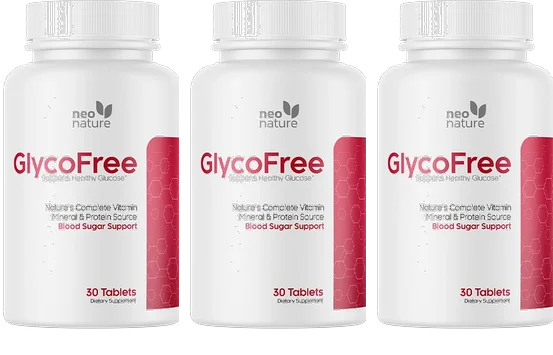
The front label also calls the tablet "Nature's Complete Vitamin Mineral & Protein Source", yet it lists no vitamins and one mineral.[1]
Which ingredients matter most?
Chromium and gynostemma carry most of the plausible effect, and dose is the problem for every blend ingredient.
- Chromium: 400 mcg disclosed, inside the trial range; results mixed.[3]
- Gynostemma: 6 g a day of tea lowered fasting glucose and HbA1c in drug-naive type 2 diabetes; a 450 mg extract lowered glucose in 16 healthy young men.[4][9]
- Berberine: lowered glucose in type 2 diabetes trials, but 45 of 54 reviews in one overview were very low quality, and the abstracts we read did not state daily doses.[5]
- Cassia cinnamon: body-fat effects appeared at 2 g a day or more for 12 weeks or longer.[10]
- Banaba: a 10 mg corosolic acid dose lowered glucose after a test drink; a 1% extract at 29 mg holds about 0.3 mg (our arithmetic).[11]
The population matters too: most positive trials enrolled people not yet on diabetes drugs. The GlycoFree ingredients guide lists every item with its study doses.
What results are realistic to expect?
Expect no measured result, because none has been measured for this tablet. The ingredient trials ran for 4 to 12 weeks (gynostemma) and up to 6 months (leucine), and the leucine trial in 60 older men with type 2 diabetes found HbA1c of 7.1% vs 7.2% at the end, no difference.[4][6] Bitter melon meta-analyses found no change in glucose or HbA1c.[7]
The most hopeful number comes from a gynostemma meta-analysis of 8 clinical studies with 584 people, which drew partly on Chinese databases: fasting glucose fell 0.79 mmol/L and HbA1c fell 1.01 points.[12] Those studies used gynostemma alone, at far larger doses, so the figures do not transfer to a tablet that splits 200 mg seven ways.
If you try it with your doctor's approval, judge it by your own glucose log over a few months, not by how you feel.
When should you see a doctor instead?
See a doctor before taking any glucose supplement if you have diabetes, and right away if any of these happen:
- Readings that stay above the target your doctor set, or keep climbing
- Shakiness, sweating, confusion or a racing heart, which can mean a low
- Strong thirst, frequent urination or blurred vision
- Any plan to cut back metformin, insulin or a sulfonylurea
HealFern's guide to high blood sugar symptoms covers the warning signs in more detail, and our GlycoFree side effects page covers the interaction risk.
Evidence conclusion
The formula as sold is unproven, and the hidden doses make the ingredient research hard to apply.
| Decision question | Current assessment |
|---|---|
| Has GlycoFree itself been tested? | No trial found, November 5, 2026 |
| Are the doses known? | Chromium only; 7 items hidden in 200 mg |
| Do the ingredients have support? | Limited for gynostemma and banaba; mixed for chromium; weak for leucine and bitter melon |
| Is it safe with diabetes drugs? | Ask your doctor; several items may add to them |
If you decide to try it, buy one bottle first and check the refund terms in our GlycoFree legitimacy check.
Back to the GlycoFree overview.
Frequently asked questions
Is there a clinical trial of GlycoFree?
We found no published trial of the GlycoFree tablet itself as of November 5, 2026. The vendor's sales page names no study. The only human data come from separate trials of single ingredients, mostly at much larger doses than the blend can hold.
How long does GlycoFree take to work?
No timeline has been measured for GlycoFree. Ingredient trials ran 4 to 12 weeks for gynostemma and 6 months for leucine, and the leucine trial found no HbA1c change. Judge any trial run by your glucose log over months, with your doctor.
Why are the GlycoFree doses hidden?
The label groups seven ingredients into one 200 mg proprietary blend and prints only the total. That averages about 29 mg each, though the real split is unknown. Only chromium, at 400 mcg, has a disclosed amount.
Does the chromium in GlycoFree help blood sugar?
The 400 mcg dose sits inside the 200 to 1,000 mcg range used in trials. The NIH Office of Dietary Supplements describes the glucose results as mixed, and chromium may add to the effect of insulin and other diabetes drugs.
Is GlycoFree better than berberine alone?
No head-to-head data exist. Berberine has its own glucose trials, though most reviews were rated very low quality. In GlycoFree it shares a 200 mg blend with six other items, so its amount is hidden and likely small.
Sources
- GlycoFree Supplement Facts label image. GlycoFree (vendor), read November 5, 2026.
- GlycoFree sales page. GlycoFree (vendor), read November 5, 2026.
- Chromium: Fact Sheet for Health Professionals (archived copy). NIH Office of Dietary Supplements, read October 19, 2026.
- Gynostemma pentaphyllum tea in drug-naive type 2 diabetes, 12-week trial (PMID 20213586). PubMed, read November 5, 2026.
- Overview of systematic reviews of berberine (PMID 40269802). PubMed, read October 19, 2026.
- Leucine with meals for 6 months in older men with type 2 diabetes (PMID 21525248). PubMed, read November 5, 2026.
- Meta-analysis of 9 bitter melon trials (PMID 38274207). PubMed, read October 2, 2026.
- Systematic review of leucine in rodent models (PMID 30264171). PubMed, read November 5, 2026.
- Gynostemma extract 450 mg in healthy young men, crossover trial (PMID 38004115). PubMed, read November 5, 2026.
- Dose-response meta-analysis of cinnamon and body composition (PMID 30799194). PubMed, read October 2, 2026.
- Corosolic acid and post-challenge glucose, crossover study (PMID 16549220). PubMed, read October 20, 2026.
- Meta-analysis of 8 Gynostemma pentaphyllum clinical studies on glucose (PMID 42064816). PubMed, read November 5, 2026.
This page is general information, not medical advice. Dietary supplements are not reviewed by the FDA for safety or effectiveness before they are sold and are not intended to diagnose, treat, cure or prevent any disease. Talk to your doctor before taking any supplement, especially if you are pregnant, nursing, take medication or have a health condition.