HealFern may earn a commission if you buy through links on this page, at no extra cost to you. That does not change what we report.
Part of our GlycoFree overview. Last checked November 5, 2026.
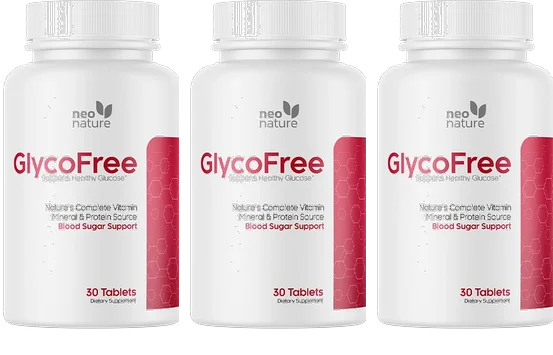
GlycoFree for diabetes is a weak bet on the evidence: each tablet holds 400 mcg of chromium plus a 200 mg proprietary blend of seven ingredients, which averages about 29 mg each, and no published trial has tested the finished tablet in people with type 2 diabetes.[2] The sales page still calls it "THE #1 FORMULA TO SUPPORT YOUR TYPE II DIABETES HEALTH GOALS".[1] That line is the vendor's, and we found no data behind it.
Should you take GlycoFree for diabetes?
Not as a replacement for anything your doctor prescribed, and not without telling them first. GlycoFree is a dietary supplement, and its own label tells anyone with a medical condition to consult a physician before use.[2] Type 2 diabetes is that kind of condition.
The vendor says the tablet "ENHANCES BLOOD SUGAR CONTROL" and will "reduce type II diabetes-related fatigue".[1] Those are claims aimed at a disease, and the sales page lists no ingredients to back them. We found the ingredient list only as a label image stored under the site's privacy folder.[2]
The bigger risk runs the other way. Berberine, bitter melon, chromium and banaba can all lower blood sugar or add to diabetes drugs, so stacking them on metformin, insulin or a sulfonylurea could push glucose too low.[3][5] Our GlycoFree side effects page covers those interactions one by one.
There is also a gap in how the two were cleared for sale. Prescription diabetes drugs needed trial data before approval. As a dietary supplement, GlycoFree needed none, and the vendor's site points to a GMP facility and an FDA registered facility, neither of which means the product was tested or approved.
What do the facts show?
The label, the sales page and the ingredient research point in the same direction: a modest, undisclosed dose of several glucose-related herbs, sold with stronger words than the evidence supports. The table sets out what we checked on November 5, 2026.
| Question | What we found | Source |
|---|---|---|
| Who is it sold to? | People with type 2 diabetes; the vendor says it "IMPROVES GLUCOSE CONTROL" | Sales page[1] |
| Ingredients on the sales page? | None listed; label shown only as an image file | Label image[2] |
| Disclosed dose | Chromium 400 mcg (1143% DV) | Label[2] |
| Hidden doses | 200 mg blend of 7 items, about 29 mg each on average | Label, our arithmetic[2] |
| Trial of the tablet itself | None found | Our search, November 5, 2026 |
| Price, 1 bottle | $69 plus shipping, checked November 5, 2026 | Sales page[1] |
Chromium is the one dose you can judge
Chromium at 400 mcg sits inside the 200 to 1,000 mcg range used in trials, and far above the adult Adequate Intake of 25 to 35 mcg a day.[3] The NIH Office of Dietary Supplements describes glucose results as mixed and lists insulin and diabetes drugs as possible additive interactions.[3]
The blend ingredients have mixed records
Berberine lowers blood glucose in type 2 diabetes trials, but an overview of 54 systematic reviews rated 45 of them very low quality.[4] Two bitter melon meta-analyses found no significant change in glucose or HbA1c.[6] Inulin lowered glucose only in people with diabetes, at fiber doses measured in grams.[7] Banaba trials are tiny: one used 10 mg of corosolic acid, while a 1% extract at about 29 mg would hold roughly 0.3 mg (our arithmetic).[8]
Gynostemma has the most consistent glucose data of the seven. Three small trials in drug-naive type 2 diabetes used 6 g a day of tea and saw fasting glucose and HbA1c fall over 4 to 12 weeks.[10] One added it to gliclazide on purpose, which shows how it can stack with a sulfonylurea.[12] All three came from one research group, and 6 g is about 200 times the 29 mg blend average. L-leucine went the other way: 7.5 g a day for 6 months left HbA1c unchanged in older men with type 2 diabetes.[11]
The GlycoFree ingredients breakdown goes through all seven items with their study doses.
Price and refund terms
Three bottles cost $177 ($59 each) and six cost $294 ($49 each), both with free shipping, checked November 5, 2026.[1] A six-bottle order covers six months at one tablet a day. The vendor's higher "regular prices" are not a fair comparison, so judge the price on its own.
What should you check before buying?
Run through this list with your own numbers and medicines in front of you.
- Your medicines. Show the label to your doctor or pharmacist if you use metformin, insulin or a sulfonylurea.
- Your glucose log. If you try it with approval, test more often for the first weeks and write the readings down.
- Pregnancy or nursing. Berberine and bitter melon are not for pregnancy, and the label asks you to consult a physician.[2][5]
- The refund terms. The sales page says 90 days and the refund page says 180, with return shipping on you.[1][9] Get the window in writing.
- The checkout. BuyGoods runs the checkout; leave the Subscribe and Save box unticked unless you want repeat orders.
Our GlycoFree price guide lists all three packages, and HealFern's guide to high blood sugar symptoms explains which readings need a call to your doctor.
Our take
We would not pick GlycoFree as a diabetes plan. It may suit someone whose doctor has approved a low-dose chromium and herb blend and who wants one small tablet a day. It does not suit anyone hoping to cut back on prescribed medicine, and the evidence for the formula as sold is thin. Food changes such as those in our low glycemic foods list have a firmer base. If you still want to try it, get medical approval and keep testing.
Back to the GlycoFree overview.
Frequently asked questions
Can GlycoFree replace metformin?
No. GlycoFree is a dietary supplement with no published trial in people with type 2 diabetes. Several of its ingredients can add to metformin's effect on blood sugar, so never stop or reduce a prescribed medicine without your doctor's direct advice.
Is GlycoFree safe for type 2 diabetics?
No safety trial of the tablet exists. Berberine, bitter melon, banaba and 400 mcg of chromium can lower blood sugar or add to diabetes drugs, which raises the risk of lows. The label itself tells anyone with a medical condition to consult a physician first.
How much chromium is in GlycoFree?
Each tablet lists 400 mcg of chromium as chromium polynicotinate, 1143% of the Daily Value. Trials used 200 to 1,000 mcg a day, and the adult Adequate Intake is 25 to 35 mcg, according to the NIH Office of Dietary Supplements.
Does GlycoFree lower A1C?
No study has measured A1C in people taking GlycoFree. Two meta-analyses found bitter melon did not change HbA1c, and the other blend ingredients sit in a 200 mg mix that averages about 29 mg each, below most study amounts.
Who sells GlycoFree for diabetes?
GlycoFree is sold through glycofree.com with BuyGoods as the retailer at checkout. On November 5, 2026, one bottle was $69 plus shipping, three were $177 and six were $294, with free shipping on the larger packages.
Sources
- GlycoFree sales page. GlycoFree (vendor), read November 5, 2026.
- GlycoFree Supplement Facts label image. GlycoFree (vendor), read November 5, 2026.
- Chromium: Fact Sheet for Health Professionals (archived copy). NIH Office of Dietary Supplements, read October 19, 2026.
- Overview of systematic reviews of berberine (PMID 40269802). PubMed, read October 19, 2026.
- Bitter Melon. Memorial Sloan Kettering Cancer Center, read October 2, 2026.
- Meta-analysis of 9 bitter melon trials (PMID 38274207). PubMed, read October 2, 2026.
- Meta-analysis of 33 inulin-type fructan trials (PMID 34401107). PubMed, read October 2, 2026.
- Corosolic acid and post-challenge glucose, crossover study (PMID 16549220). PubMed, read October 20, 2026.
- GlycoFree refund policy. GlycoFree (vendor), read November 5, 2026.
- Gynostemma pentaphyllum tea in drug-naive type 2 diabetes, 12-week trial (PMID 20213586). PubMed, read November 5, 2026.
- Leucine with meals for 6 months in older men with type 2 diabetes (PMID 21525248). PubMed, read November 5, 2026.
- Gynostemma pentaphyllum added to gliclazide in type 2 diabetes (PMID 23125867). PubMed, read November 5, 2026.
This page is general information, not medical advice. Dietary supplements are not reviewed by the FDA for safety or effectiveness before they are sold and are not intended to diagnose, treat, cure or prevent any disease. Talk to your doctor before taking any supplement, especially if you are pregnant, nursing, take medication or have a health condition.